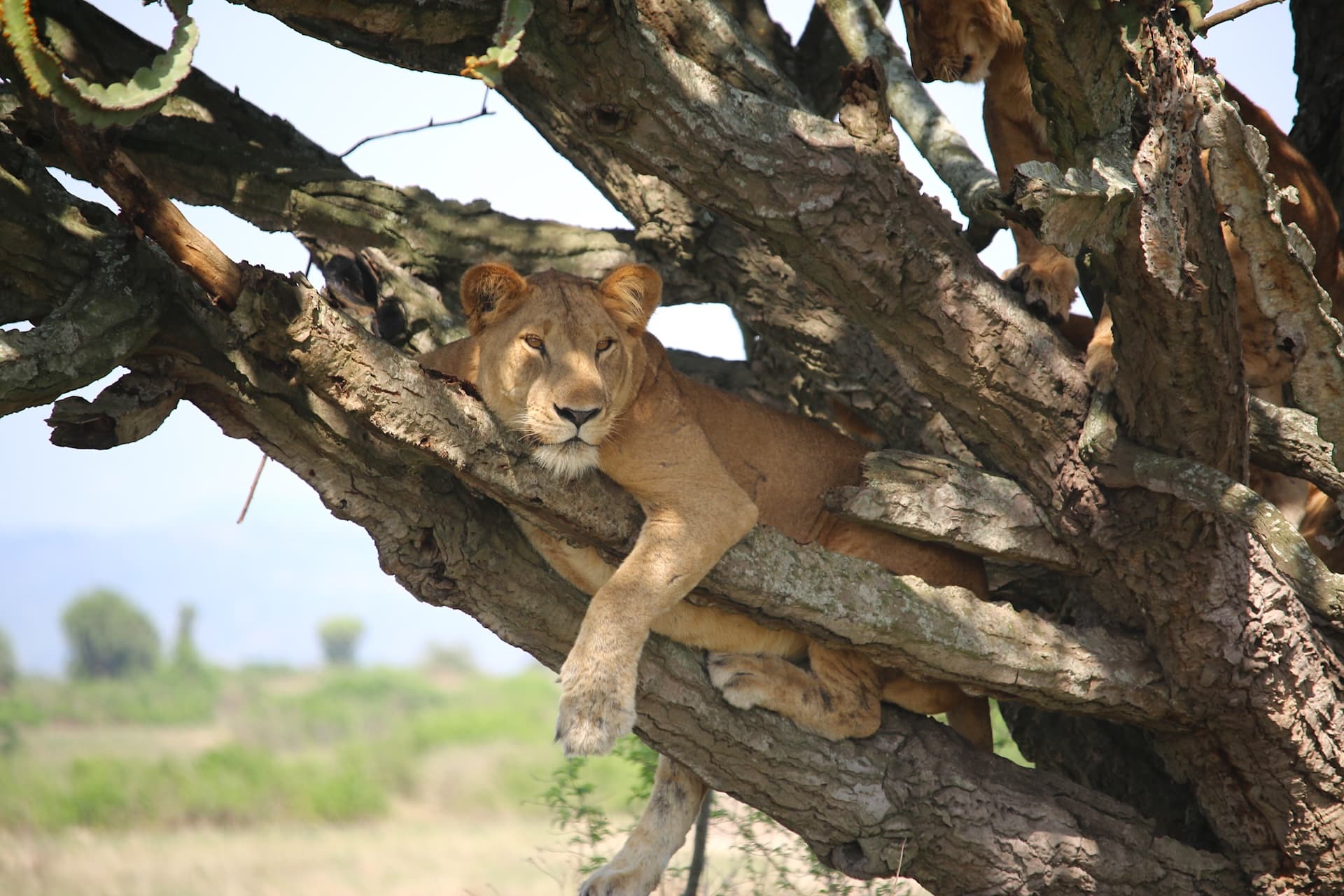
Queen Elizabeth National Park, located on the western side of Uganda, is one of East Africa’s most diverse and captivating wildlife reserves. Known for its vast savannahs, volcanic craters, wetlands, and rich biodiversity, it is also home to one of the most unique wildlife experiences available: lion tracking. This program offers a rare and structured opportunity to observe lions in their natural habitat while contributing directly to ongoing conservation efforts. It is where tourism meets science, and where a thrilling adventure becomes something far more meaningful.
An Early Start in the African Dawn
It was an early start for our lion tracking experience. The African dawn has a particular stillness to it, a quiet anticipation before the heat of the day settles in. As we arrived at the entrance gate, that calm was replaced by a scene of organised chaos. Vehicles were scattered around, engines idling, people chatting, guides conferring. It was your typical African “hurry up and wait.”
We stood around for 45 minutes while permits were checked, radios crackled, and final arrangements were made. I have to admit, I was slightly uneasy. There were at least 20 vehicles gathered at the gate, and I couldn’t help but imagine a crowded, rushed experience. I had come for something immersive, something intimate. Watching wildlife surrounded by a convoy of vehicles was not what I had hoped for.
Some of the vehicles looked as though they had seen better days, and I quietly doubted whether they would be capable of venturing off-road. That thought, as it turned out, would become quite important later in the day.
Eventually, the groups were sorted, and we learned that only six vehicles would be part of the lion tracking activity. Relief washed over me. This felt far more promising.
Into the Wild: The Search Begins
With a low rumble of engines, we set off into the park. The vehicles moved in convoy, kicking up clouds of fine red dust that hung in the morning air. The excitement inside each vehicle was palpable. Conversations ebbed and flowed, punctuated by moments of quiet scanning, each of us hoping to be the first to spot something remarkable.
The landscape stretched out before us in wide open plains, dotted with acacia trees and broken occasionally by termite mounds rising like small towers from the earth. We passed herds of buffalo grazing lazily, antelope darting gracefully through the grass, and zebra standing in small groups, their stripes shimmering in the morning light.
Our guides explained how the tracking worked. The lions in this area are fitted with radio collars, allowing researchers to monitor their movements. Using telemetry equipment, the trackers can locate the lions with impressive accuracy. It is not just about finding them, though. It is about understanding them—how they move, where they hunt, how they interact, and how they coexist with the surrounding communities.
A Moment of Doubt
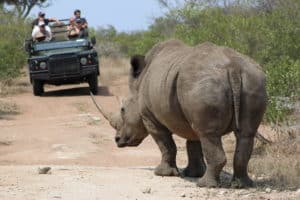
As we rounded a bend, the mood shifted. Ahead of us was a cluster of vehicles, tightly packed together. A traffic jam in the middle of the savannah. My heart sank. This was exactly what I had feared. Engines idling, people craning for a better view, cameras raised—it felt more like a crowded attraction than a wilderness experience.
In this park, vehicles are not allowed to drive off-road unless they have special permission. Most of the vehicles were stuck to the track, unable to move closer or reposition themselves.
Then, everything changed.
Our lead vehicle veered off the track. We followed.
We had permission.
Off-Road and Into the Real Experience
Suddenly, the noise and congestion faded behind us. We ducked and weaved across the terrain, navigating small watercourses, avoiding deep potholes, and steering around towering termite mounds. The guides handled the vehicles with remarkable skill, reading the landscape as if it were second nature.
Within minutes, the traffic jam was nothing more than a distant memory. For the next two and a half hours, we would not see those other vehicles again.
We came to a gentle stop and lined up at a respectful distance. There, partially hidden beneath the bushes, were two lionesses. Just beyond them, about fifteen meters away, were three small cubs.
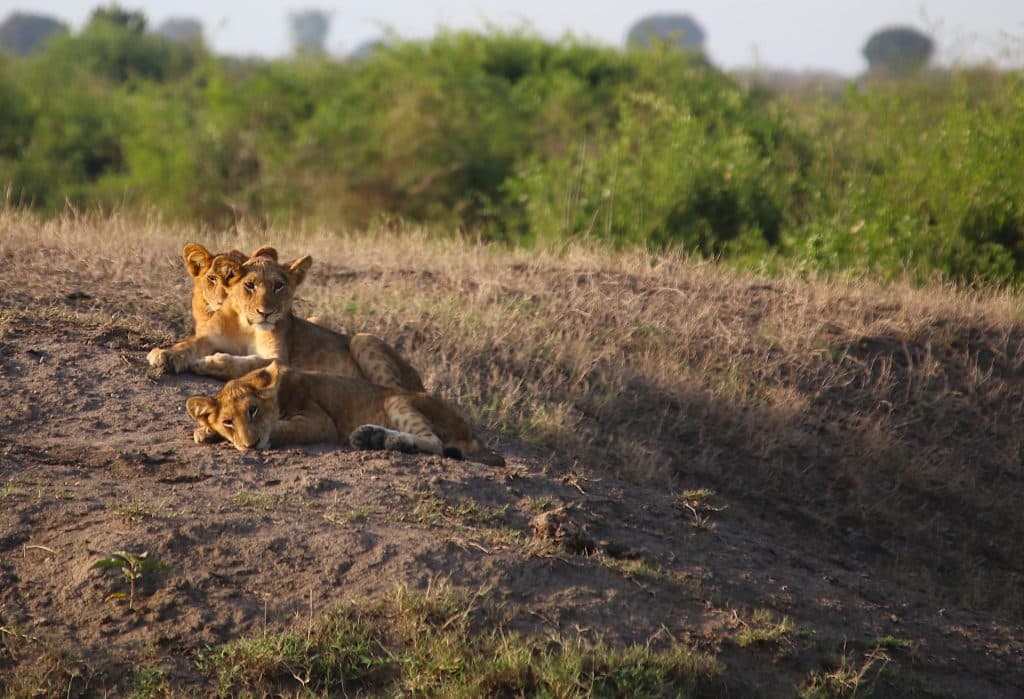
They were young enough to still have faint spots on their coats, a reminder of their early days, but old enough to be full of energy. They tumbled over each other, chased invisible targets, and explored their surroundings with boundless curiosity. All the while, the lionesses watched—calm, alert, protective.
It was a moment of pure magic. Quiet, intimate, and completely undisturbed.
Life Inside the Pride
After spending half an hour with the first pride, we moved on, guided once again by the steady signals from the tracking equipment. The tracker leaned out of the vehicle with his aerial, adjusting and listening, homing in on another collared lion.
We crisscrossed the plains, the vastness of the savannah opening up around us, until we came upon another pride.
This time, there were two adult females and four cubs, older than the first group, perhaps around two years old. They were lounging in the morning sun, stretched out and relaxed, clearly in no hurry to go anywhere.
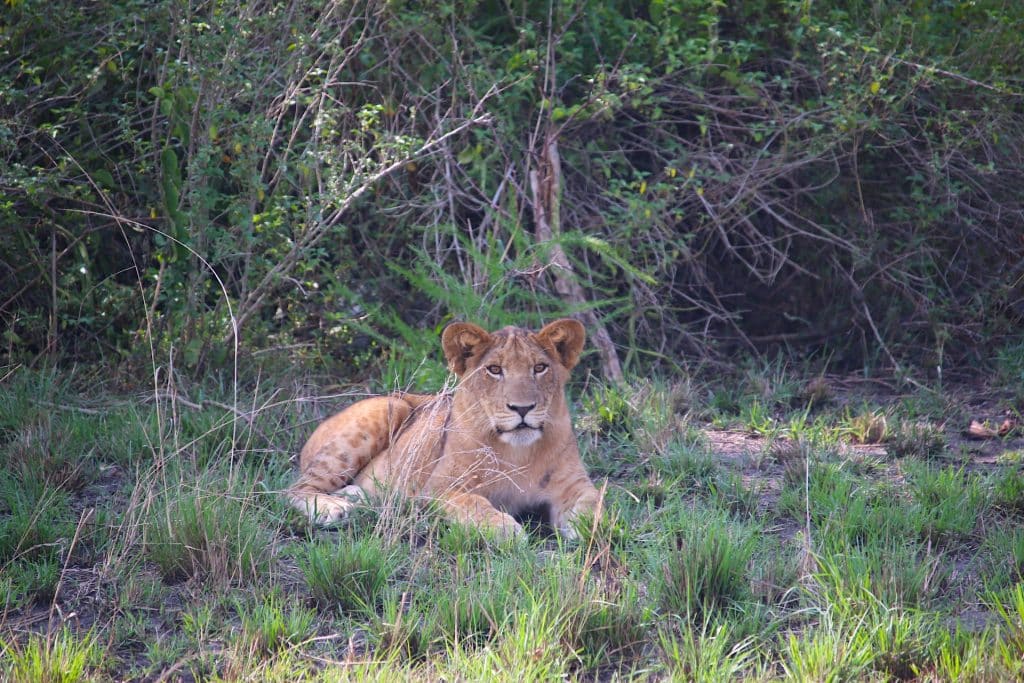
One young male stood out immediately. He had a mischievous energy about him, constantly disturbing his siblings. Every time one of them tried to settle down, he would pounce—chewing ears, climbing over them, refusing to let anyone rest. It was endlessly entertaining, a glimpse into the playful chaos of lion family life.
We watched, completely absorbed, as these interactions unfolded naturally in front of us.
An Unexpected Turn: The Leopard
At one point, our guide quietly slipped away, telling us to stay put. We continued watching the lions, curious but patient. Then, in the distance, we saw him wave us over.
Reluctantly, we left the pride behind and drove toward him.
What we found was completely unexpected. A leopard.
She was sitting in the open, something quite unusual, and had positioned herself cleverly in the shade cast by our vehicles. Nearby, a group of kob antelope grazed, unaware of the danger.
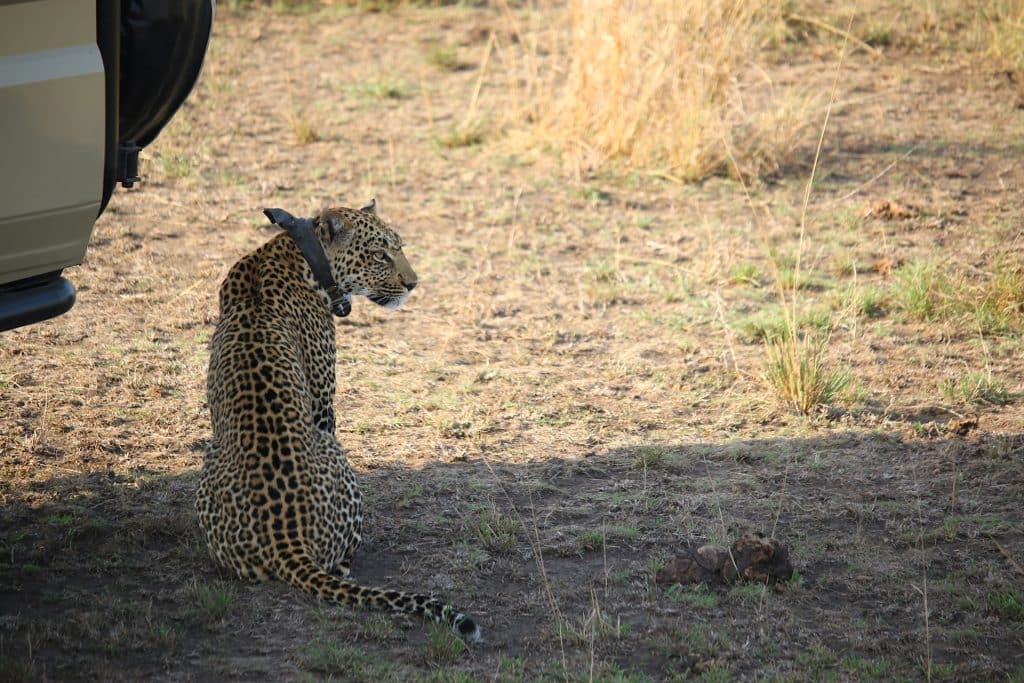
The leopard’s entire demeanour shifted as she prepared to hunt. Her body lowered, her movements became deliberate and controlled, and her eyes locked onto her target. She moved forward slowly, almost melting into the tall grass.
Within moments, she disappeared completely.
It was astonishing how quickly she vanished, a masterclass in camouflage and stealth. We kept our distance, careful not to interfere. Eventually, we were told to move on, leaving her to her hunt.
Tree Climbing Lions
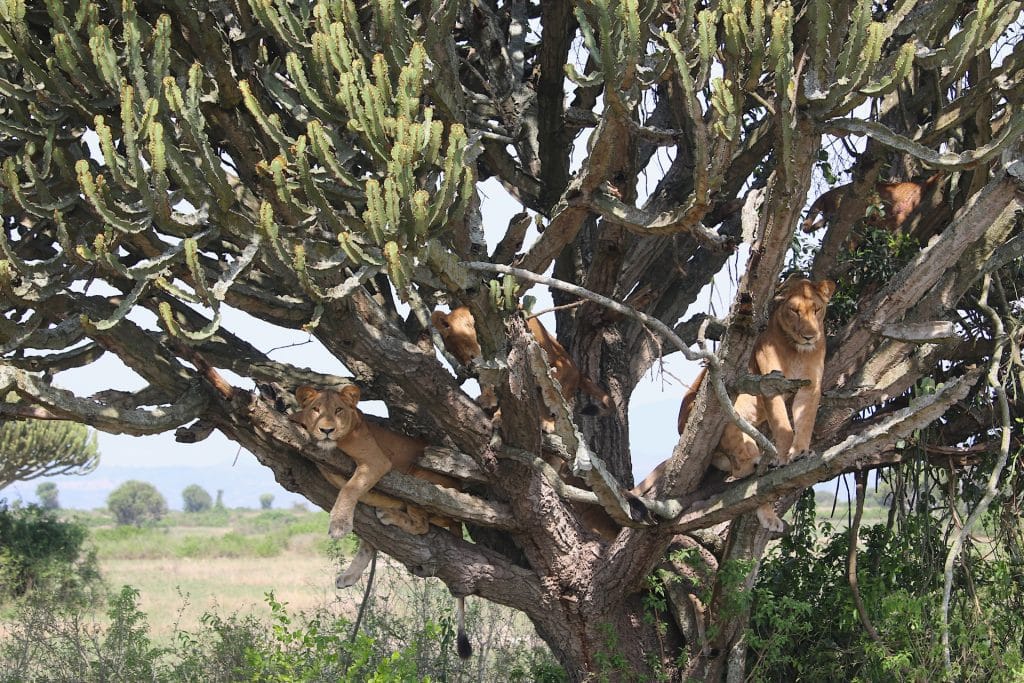
One of the most remarkable features of Queen Elizabeth National Park is its population of tree-climbing lions. This behaviour is rare and not commonly seen in other parts of Africa. The reasons are still debated, but it is believed to help lions stay cool, avoid biting insects, and gain a better vantage point.
Later in the day, we encountered a familiar sight. The same pride we had seen earlier, but this time in an entirely different setting.
They were in a euphorbia tree.
The cubs were sprawled across the branches, balancing with surprising ease. One of the females, however, looked far less comfortable. She shifted awkwardly, trying to settle herself among the sharp spines of the tree. It was both amusing and fascinating to watch—such powerful animals in such an unusual and precarious position.
Conservation at the Heart of the Experience
Throughout the day, it became increasingly clear that this experience was about more than just wildlife viewing. Lion tracking plays a vital role in conservation.
The data collected from radio collars provides invaluable insight into lion populations, their territories, and their movement patterns. It also helps researchers understand how lions interact with nearby communities, where conflicts may arise, and how those conflicts can be reduced.
In areas surrounding the park, livestock predation can be a serious issue. Initiatives such as predator-proof enclosures have been introduced to protect local livelihoods while reducing retaliatory killings of lions.
The funds generated from tourism help support all of this work. Anti-poaching patrols, habitat management, research programs, and community outreach all benefit directly from visitors choosing to take part in activities like lion tracking.
A Day That Meant More
As the day drew to a close, it was clear that this had been something truly special. We had not only witnessed incredible wildlife—lionesses, playful cubs, a stealthy leopard, and even tree-climbing lions—but we had done so in a way that felt respectful, immersive, and meaningful.
There was a sense that our presence had contributed to something larger. That by being there, by participating, we were helping to ensure that these animals continue to roam these landscapes for generations to come.
Lion tracking in Queen Elizabeth National Park is more than just a safari activity. It is an experience that connects people to wildlife, supports conservation, and highlights the delicate balance between nature and human communities.
It is, quite simply, one of the most rewarding ways to experience the wild.